

July Native News Roundup
From the courthouse to the ballot box, from sacred lands to the solar fields of Indian Country, Native people are leading and winning. But the fights over our lands, our voting rights, and our stories

Protecting Voting Rights and Democracy
Voting rights advocates scored three legal victories last month–and those victories matter for Native votes.
The Supreme Court upheld mail ballot grace periods in a landmark ruling last month. Republicans had challenged a Mississippi law that allows ballots to be counted if they are postmarked by election day, but received up to five days later. The legal victory for voting advocates protects similar grace periods nation-wide. For rural & Tribal voters this is key; many Native Americans living in rural areas face longer mail delays. Two Trump executive orders restricting voting were also struck down.
But the fight isn’t over. Trump is continuing to push Congress to pass the SAVE Act, which would be devastating for Native voters in more ways than one. The bill seeks to place new hurdles on people registering to vote. Under its provisions, rural and reservation-based Native voters would have to travel long distances to even register to vote. The bill also doesn’t allow new voters to use tribal IDs–which are issued by sovereign nations and legally recognized–to register. Native voting advocates are calling on Congress members to vote no. Trump is demanding that the Republican-controlled Senate cancel its upcoming summer break until his signature legislation passes, but with Republicans’ slim majority it is unclear if he has the votes to get it through.
Representation for Indian Country continues to grow.
Peggy Flannagan, a citizen of White Earth Nation and progressive Democrat, is running for U.S. Senate in Minnesota. She currently serves as the state’s Lieutenant Governor. If elected, she would be the first Native woman ever elected to the Senate. But, like many Democratic primaries this cycle, the fight is fierce. Dark money groups have spent about $12 million to knock her out of the primary. Some recent polls have Flannagan pulling ahead, but the race is still neck and neck.
Next year, the U.S. Senate could see two Native women serving in the chamber. In Alaska, former Congresswoman Mary Peltola is running for Senate as a Democrat. Although Alaska leans remarkably red (Trump won the state by 15+ points), Peltola has won a statewide race before. Because of its population size, Alaska has only one member in Congress. And so when Peltola was elected in 2022, she represented the entire state. Democrats are hoping a Peltola victory in Alaska might help the party win back the Senate in the 2026 midterms. With control of the Senate potentially riding on her race, Peltola has seen a flood of donations.
Former Secretary of the Interior Deb Haaland is running for Governor in New Mexico. Earlier this year, Haaland won her Democratic primary in a landslide with over 70% of the vote. Haaland is favored to win in November. If she does, she would be the first Native woman to ever serve as a state’s Governor in the U.S.. Haaland has already made history as one of the first Native women ever elected to Congress and the first Native person to serve as a U.S. Cabinet Secretary.
And in more election news, a Ysleta del Sur Pueblo citizen was part of the progressive sweep in New York. Claire Valdez won the Democratic primary for New York’s 7th District. New York Mayor Zohran Mamdani endorsed Valdez. She’s one of 10 Native candidates advancing to November.
In tribal election news, Lumbee voters rejected a constitutional amendment tied to casino plans. For tribal members, the referendum wasn’t about gaming; it was about governance. Voters wanted more say in decisions affecting their community.
Land Back and Sacred Sites
Tribes are fighting to protect ancestral lands and sacred sites against new–and old–attacks.
Last month, President Trump shrunk Bears Ears by 91% and Grand Staircase-Escalante by 90%. Bears Ears was the first national monument co-managed by tribes. The site is sacred to the Ute, Navajo, Hopi and Pueblo. The area contains over 100,000 cultural and archaeological sites–including cliff dwellings, petroglyphs and burial grounds. All that is now vulnerable to mining and drilling.
The Ute Tribe is also fighting to recover more ancestral land in Utah, but a state lawmaker is trying to block them. The tribe wants to buy back land in the state, but instead a Utah Republican is advocating for the land to be set aside for recreational hunting. And a herd of wild horses in California is sacred to the Kauk and other Native people, but against the objections of the tribe, the federal government started rounding the horses up. Tribes asked for a 2-year delay and real co-management, but so far the courts have said no.
Telling the Truth About America’s Past
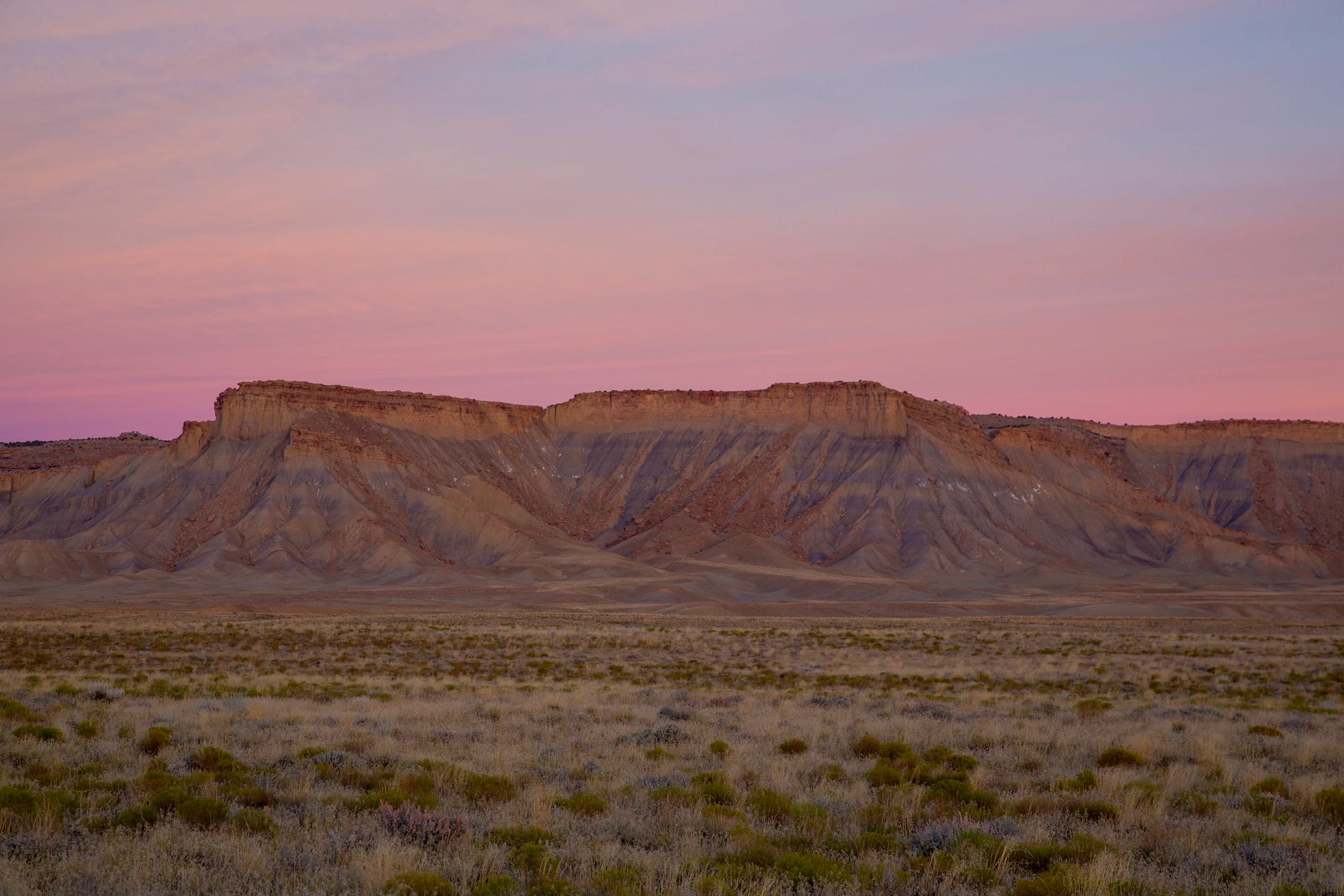
On the 4th of July, the Trump administration released a 162-page report targeting the Smithsonian’s treatment of Native history. The report calls the acknowledgment of genocide and land dispossession “ideological” rather than historical fact. During Trump’s second term, we’ve seen increasing attacks on how Americans learn and tell our history. The fight over history is about more than the past. What we tell ourselves about who we are and where we’ve been as Americans is a fight over what kind of country we will become.
The Senate Committee on Indian Affairs is pressing 15 universities—including the University of Oklahoma—to finally comply with NAGPRA. NAGPRA requires universities that receive federal funding to return human remains and funerary objects to tribes. The remains were often dug up and desecrated during older and racist practices of archeology and anthropology. OU still holds 1,477 Indigenous remains and 7,798 funerary objects. Tribes have waited over 35 years for their people to come home. It’s time.
The fight for climate justice
Data centers are trying to come to tribal land. But tribes are pushing back. The Seminole Nation of Oklahoma became one of the first tribal governments to ban them. The Cherokee Nation is studying impacts. Osage Nation is weighing Google’s Project Spring. Many communities are fighting data centers because they can contaminate local water and lead to soaring energy costs. According to the United Nations, by 2030, AI data infrastructure is predicted to consume water equal to the needs of 1.3 billion people.
The Ponca Nation became the first Tribe in the U.S. to endorse the Fossil Fuel Treaty, a global agreement for an equitable phaseout of oil, gas, and coal. 37 Indigenous nations and 18 countries have now joined. This matters because Oklahoma is the 6th largest oil and gas producer in the U.S., and the Ponca Nation sits at the epicenter of fracking and extraction. Decades of pollution have contaminated their water, soil, and air. For years, the Ponca have been at the forefront of climate justice, banning fracking on their land and passing Rights of Nature legislation.
Tribes continue to be on the front lines of the climate crisis, and nowhere was this more evident than during the devastating Canadian wildfires. Both Namaygoosisagagun First Nation and Whitewater Lake First Nation were devastated by fast moving fires, while other tribes saw significant damage. Click here for ways you can donate to impacted communities.
July also saw some victories for Indigenous climate justice. The state of Alaska tried to control Native subsistence rights, but tribes fought back–and won. Alaska now must pay $1.8M in legal fees to four Native groups after losing a federal lawsuit over Kuskokwim River fisheries management. And lastly, the Coyote Valley Band of Pomo Indians just wrapped a 2.23-megawatt solar carport project that will cut their electricity nearly in half. The project was paid for by a $3.2 million federal grant and a 25-year power purchase agreement.
What federal funding cuts mean to survivors of sexual assault and domestic violence
Since Trump was reelected, there has been increasing attention on how federal funding cuts have affected everything from air traffic control to public health. A new reporting offers a sobering look at what federal funding cuts have meant for Native survivors of sexual assault and domestic violence. The report–“Sacred Responsibility, Protecting Our People“ from UIHI–documents how federal funding cuts since January 2025 have devastated programs serving Native survivors of domestic violence, sexual assault, and Missing and Murdered Indigenous People (MMIP).
Key findings from a survey of 201 programs show that 64% report being substantially impacted, 84% rely on federal funding for more than half their budget, and 44% say services for victims have been or will be cut. The stakes are life and death: CDC data shows AIAN homicide rates are nearly five times higher than for white people. 58% of AIAN women experience intimate partner violence in their lifetimes.
Connect with me!
My new podcast First America uncovers the true story of how the United States came to be, and how our current political moment is 250 years in the making. The full season is out now! Listen wherever you get your podcasts.
I got to speak with Amy Goodman on Democracy Now! about how the U.S. remembers its past. I also joined Stacey Abrams and Heather Cox Richardson in a conversation about the history this country keeps trying to skip—and why that’s a problem for all of us, not just Native people. We get into what’s been erased, what’s been rewritten, and how it all shapes where we go from here. I sat down with The Intercept to talk about America 250 and what it costs when Native people are left out of America’s origin story.
And check out these in person events!
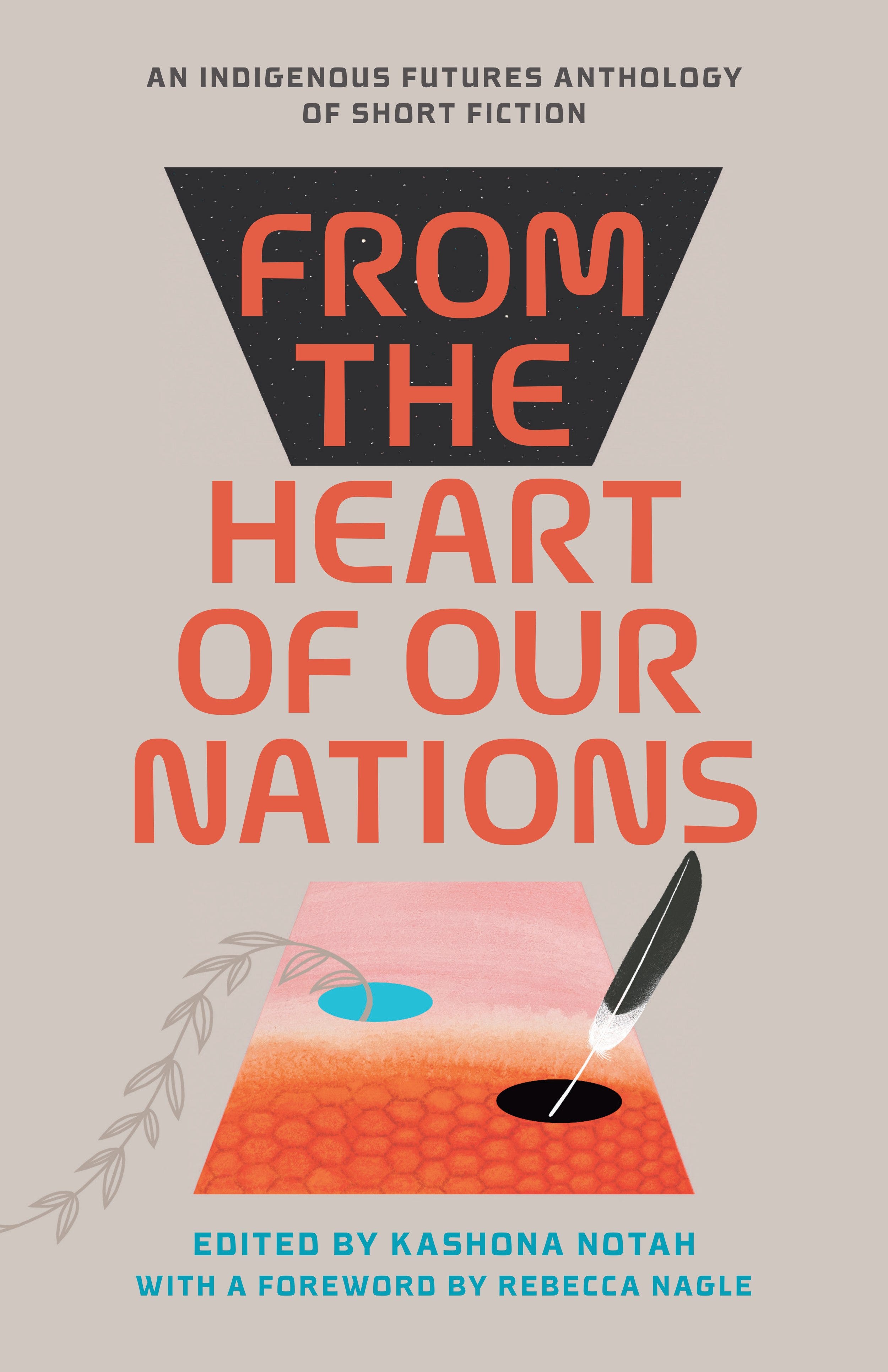
THIS FRIDAY, celebrate Indigenous futures and a new fiction anthology authored by Indigenous young people. Earlier this year, First America hosted two creative writing workshops—one in Tulsa and one virtual—bringing together emerging Indigenous writers representing Native Nations from across the United States. Led by Kashona Notah (Iñupiaq), participants were invited to imagine Indigenous communities 250 years into the future. Their visionary stories now come together in this new anthology, FROM THE HEART OF OUR NATIONS published by OK Stamp Press. The book launch event is this July 31 in Tulsa and online. Click here to learn more.
On Saturday, August 1, I’ll be in conversation with author Barbara Kingsolver at the Post Oak Lodge. If you’re in the area, I’d love to meet you.
First America is headed to Santa Fe Indian Art Market. Catch me in conversation with Maggie Blackhawk at MOCNA on Sunday, August 16.
Let me know in the comments what other topics and content you want me to cover!
Support Native America!
If you like what you’re reading, please consider becoming a paid subscriber. For as little as $2 a month you can support my writing. Another great way to support this newsletter is to share it!
A rich load of news, much of it good! Thank you.